
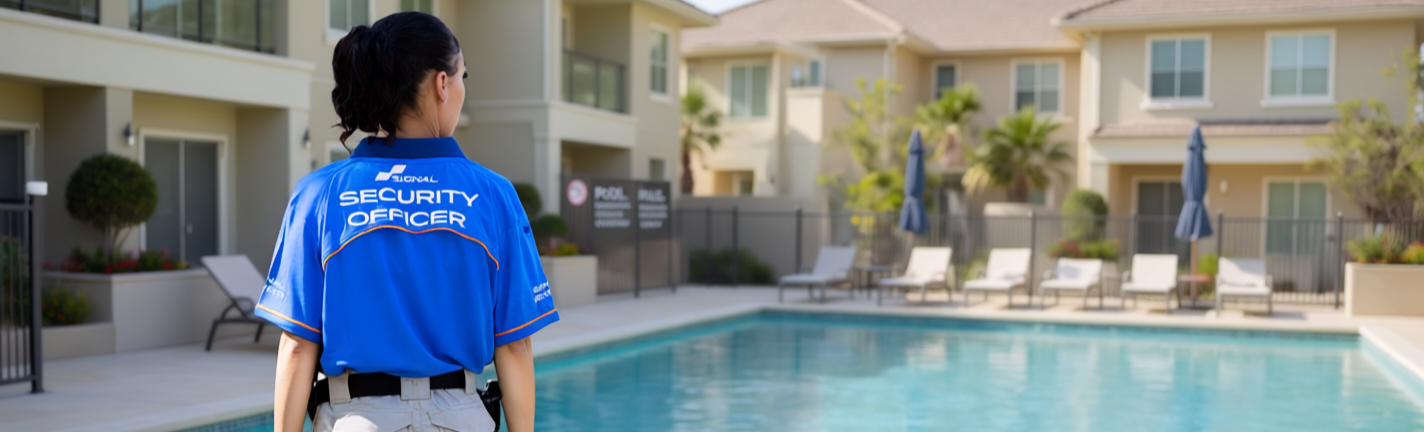
Every spring, apartment communities, condos, and residential properties across the country uncover their pools, put out the lounge chairs, and welcome residents back to one of the most-used amenities on the property. And every spring, the same challenge returns with it: how do you keep your pool area safe, compliant, and under control when your team simply cannot be everywhere at once?
Pool security is one of the most overlooked aspects of property management. It often gets addressed only after an incident has already happened. Whether you are a property manager, HOA board member, or multifamily operator, here is what you need to know about protecting your pool area this season.
Why Pool Security Matters More Than You Think
Pools are magnets for activity, and not all of it is welcome. When the leasing office closes for the evening, your maintenance team heads home for the weekend, and holidays thin out your staff, the pool area does not close with them. Residents are still out there. Guests show up. Unauthorized visitors find their way in through unlocked gates. The music gets louder. Rules get ignored.
The risks are real, and they compound quickly.
Unauthorized Access – Pools that are not properly secured after hours can invite trespassers. This may create liability exposure for your property if someone is injured while accessing the pool outside of permitted hours.
Policy Non-Compliance – Guest limits, alcohol restrictions, noise ordinances, and age requirements all exist for a reason. Without anyone to enforce them, they become suggestions rather than rules.
Gate and Facility Damage – When pool areas are not locked properly at night, gates, furniture, and equipment are left vulnerable to theft and vandalism.
Legal and Insurance Liability – Incidents at unsecured pools can result in significant legal exposure for property owners and managers. Insurers take note of how well amenities are monitored and how consistent policies are enforced.
The bottom line is that a pool without proper oversight is not just an amenity. It is a liability.
The Coverage Gap Most Properties Do Not Plan For
With property management, your team is stretched thin. Leasing agents, maintenance staff, and property managers all have full plates. Expecting them to also serve as pool monitors during evenings, weekends, and holidays is not realistic, and in most cases, it is not even feasible.
The hours between when your office closes and when your team returns are exactly when most pool-related incidents occur. Noise complaints. Unauthorized guests. Gates left unsecured. Residents frustrated that the community’s rules are not being upheld.
This is not a failure of your team. It is a staffing reality that requires a dedicated solution.
Understanding where your coverage gaps exist is the first step. Ask yourself:
- Who is responsible for locking the pool gate each night?
- What happens when that person is on vacation or calls out sick?
- How does your team respond to a resident complaint about the pool at 10 PM on a Saturday?
- Is there any documentation trail if an incident occurs after hours?
If the answer to any of those questions is “not sure,” your property has a coverage gap worth addressing before pool season gets fully underway.
What Effective Pool Security Actually Looks Like
Pool security does not require a full-time, dedicated guard stationed at the water’s edge. For most residential properties, a layered approach with scheduled patrols and documented procedures is both practical and effective. Here is what that looks like in action.
Routine Patrols
Scheduled patrols of the pool area during the day, evenings, and weekends serve two purposes. First, they give you documentation that the area was checked and conditions were noted. Second, and just as importantly, a visible security presence changes behavior. When residents and guests know that someone is making regular rounds, they are far more likely to follow posted rules without anyone having to say a word.
Patrols do not need to be constant to be effective. Regular, predictable presence can be enough to deter the kinds of problems that stem from a sense that no one is watching.
Nightly Lock-Up Procedures
Securing the pool at closing time should be a formal, documented process, not something that gets done when someone remembers. That means confirming the area has been cleared of guests at closing time, securing gates and entrances, and keeping a record of when and by whom the lock-up was completed.
This documentation matters more than most property managers realize. In the event of an incident, being able to demonstrate that your property had a consistent, documented lock-up process can be meaningful evidence of due diligence.
Guest Verification
Checking that pool users are residents or authorized guests is one of the most straightforward ways to reduce unauthorized access and improve the experience for the residents who are actually supposed to be there.
Unauthorized pool use is a common resident complaint in multifamily communities. When residents see that rules are being enforced consistently, their satisfaction with the community improves. That has a direct impact on lease renewals.
Incident Documentation
Any time a pool-related issue occurs, whether it is a noise complaint, a policy violation, or a physical incident, having a documented record is essential. This means noting what happened, when it happened, who was involved, and what action was taken. Consistent documentation helps protect your property and gives you the information you need to identify patterns and adjust your approach over time.
How to Evaluate Your Current Pool Security Protocol
Before pool season is fully in swing, it is worth taking stock of where your property stands. A few questions worth working through with your team:
Who owns pool security on your property? If the answer is unclear or the responsibility is spread across multiple roles without a clear lead, that is a gap worth closing.
Are your pool rules posted clearly and enforced consistently? Rules that exist on paper but are not enforced do not protect you and frustrate residents who follow them.
Do you have a documented closing procedure? If your lock-up process relies on whoever happens to be the last person on site, it is not a procedure; it is a habit. Habits can be inconsistent, leaving your property vulnerable.
Are you covered during evenings, weekends, and holidays? These are the highest-risk windows for most properties. If your staffing plan does not include oversight during those hours, you have an exposure worth addressing.
What is your response protocol when something goes wrong after hours? Knowing who to call and what steps to take before an incident happens is far better than figuring it out in the moment.
Pool Season Does Not Wait
Your pool may already be open or will be very soon. Every week without a clear security plan in place is another week of potential incidents, frustrated residents, and gaps in your documentation trail. The good news is that effective pool security does not require a major overhaul of how your property operates. It requires a plan, consistent execution, and the right support in place for the hours your team cannot cover.
Where Signal Comes In
Signal is a professional mobile patrol and security service built for residential communities, apartment complexes, condos, hotels, and similar properties. During pool season, Signal provides flexible monitoring services specifically designed to fill the coverage gaps that most property teams cannot address on their own.
From routine pool checks and guest verification to nightly lock-ups and incident documentation, Signal officers extend your team’s reach during the evenings, weekends, and holidays when staff are unavailable. It is a practical, scalable way to maintain oversight of your amenities without adding to your internal headcount.
Pool season should be something your residents look forward to and something you feel confident about. Signal is here to help make that possible.
Reach out to your local Signal provider to learn more about pool season coverage options for your property.
Each Signal franchise is independently owned and operated. Pricing, services, and availability are estimates only and may vary based on site conditions, scope of work, and final agreement. All information is subject to change without notice.