
Businesses need a secure environment to grow and thrive. As a property owner or manager, you should ensure every client or employee feels safe and confident operating in your building. And that starts with being aware of the current and emerging security threats and then finding solutions to overcome the challenges. To help get you started, here are the top five security threats facing commercial properties.
1. Access Control
Most commercial buildings have access control measures to keep out unauthorized people from some or all parts of a building. Some measures may includes some form of swipe cards, key fobs, biometric scans, personal identification numbers, security tokens, or presenting identification documents. Unfortunately, these measures can be circumvented when the right processes are not in place, such as anti-tailgating and visitor accountability.
Tailgating occurs when an intruder closely follows authorized people and gains entry to a secured location. When the authorized persons present identification documents, the security personnel mistakenly assumes they all work together and fails to check every document. Another way this happens is when an authorized person swipes the card and holds the door for the person behind without stopping to check whether the person works in the building. Fortunately, this problem can be overcome by investing in anti-tailgating doors and raising awareness among the clients and their staff. You should also provide a platform where people can swiftly report tailgating attempts to security officers.
Even with anti-tailgating measures in place, access control can become an issue if not all visitors are accounted for. If you can’t tell who comes and goes out of your commercial premises, it’s hard to assure clients that they will be safe. You can only maintain a high level of security when you have a system that records every visitor who enters and the time they arrive and leave. In case anything happens, you can pinpoint the people who were in the building at that specific time-frame. You can use ID doors and swipe-cards for people who work there, and visitor passes for new people. This will ensure nobody sneaks in under the radar.
2. Old Technology
A lot of commercial properties still rely on old technology to fend off intruders. To keep up with the latest security threats, you will need to upgrade old technology. For instance, old CCTV technology captures grainy images, making it difficult to identify an unauthorized person who entered the building. Instead, invest in modern CCTVs that can record high-quality videos that can be viewed from any connected device in real-time.
Alarm systems need to be upgraded too. Traditional alarms were only meant to let out a loud siren whenever an intrusion was detected. However, a noisy alarm is not enough to put-off an encroacher. There are now advanced alarms that can be configured to send notifications to the police, private security personnel, and even the property manager whenever a perimeter breach is detected. Instance reporting can help you respond fast and stop the break-in on time.
3. Theft and Burglary
Theft and burglary are two common security threats for all kinds of properties, including commercial properties. Although they commonly occur, it’s relatively easy to protect against them if the right measures are used, such as eliminating easy access to all entry points. For instance, if there are windows on the first floor that can be easily opened or glass that can be smashed to give way, you should consider installing a steel mesh.
Another point of entry is the door. How strong is it? If it can’t withstand battering, you need to acquire a strong security door. You can then complement these measures using technologies such as CCTV, alarms, and motion detectors.
4. Threat Assessments
The threat landscape changes significantly every year, as intruders find new ways to access buildings. Yet, a good number of commercial premises fail to update their security practices frequently. Conducting a thorough security assessment of the building and the surroundings allows you to identify vulnerabilities and address them on time. Property or office managers assess outdoor fencing and protective barriers, ensure that cameras have an unimpeded view, provide ample lighting, especially in parking lots and garage, and check how all entry and exit points are used.
5. Lack of Trained Security Officers
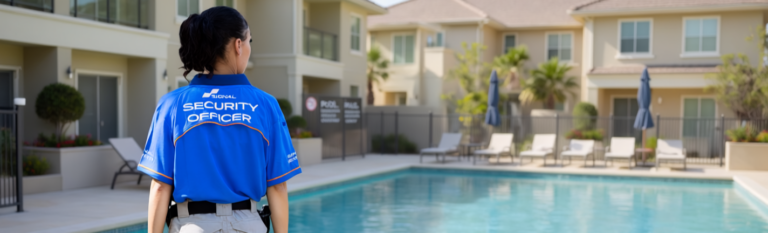
Traditionally, commercial properties have employed on-site courtesy officers to sit behind a desk, check credentials, and monitor cameras. However, that leaves a lot of idle time that can lead to distraction and fatigue. The modern solution is to use trained security officers that roam the property, including in highly visible vehicles.
Instead of being fixed behind a desk the entire time, these professionals are always on high alert, actively patrolling the property. This makes it easy for them to identify issues before they become a problem and deter crime with their randomized patrolling tactics. Their professional training also helps them to know the appropriate action to take when a situation does arise.
Finding the Right Security Services for your Commercial Property
To keep your clients and residents safe, you need to have solid security measures in place. Get started by contacting Signal for a security assessment and learning how this innovative security solution can help safeguard your property so your clients and employees can feel free, safe, and comfortable.